




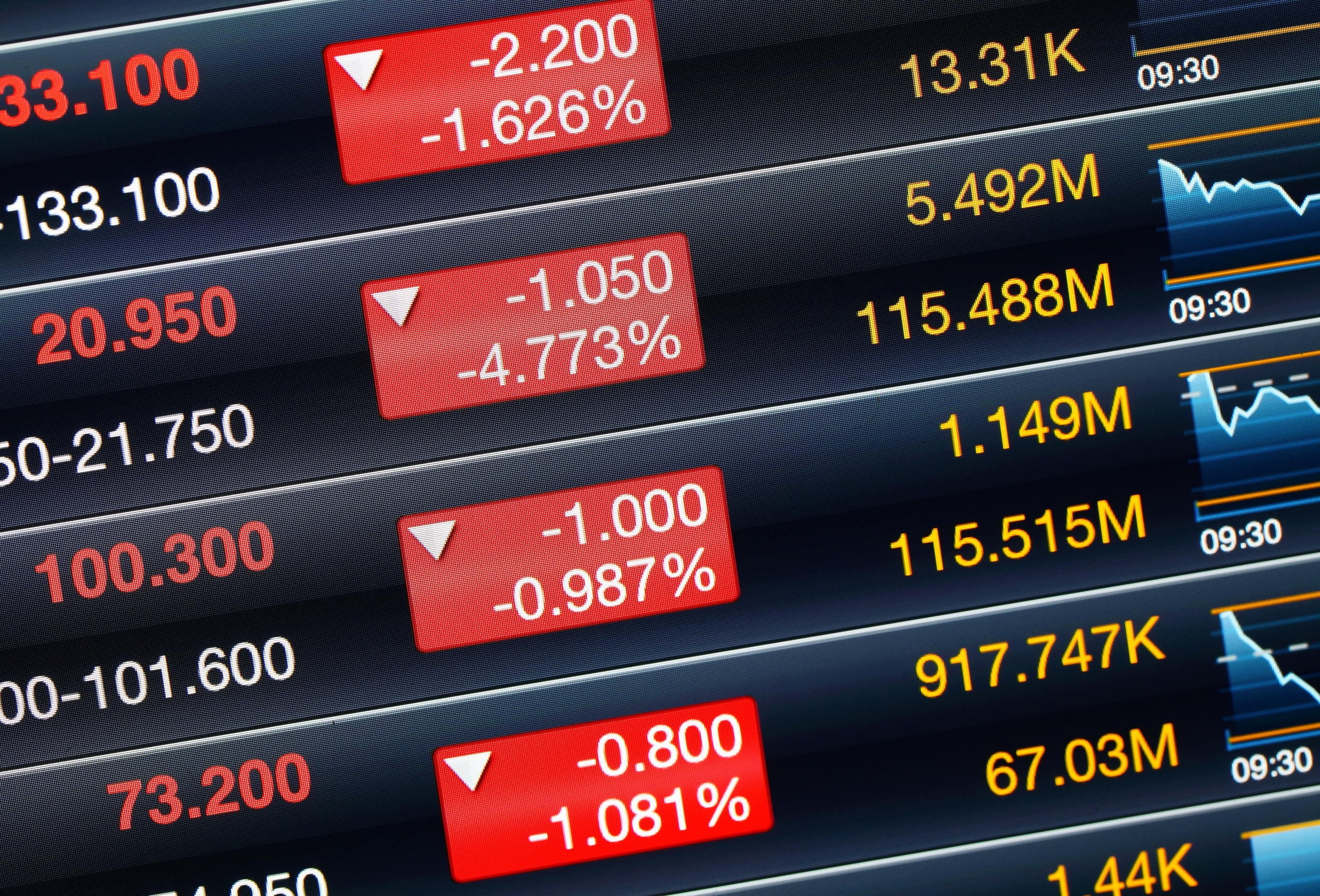
The global financial markets have been volatile since mid-February, with US stocks especially badly hit. Some commentators are now predicting a market crash. What, if anything, should investors do
It was all looking so rosy for the global equity markets. When Donald Trump won the Presidential election in November, U.S. stock prices rose in anticipation of deregulation and tax cuts, and markets of the world mostly followed suit. The optimism continued into the new year but then, in mid-February, the mood changed.
So far, the market falls we’ve seen have been relatively modest. Yes, the S&P 500, America’s primary stock index, has just had its worst week in six months. But the fallout elsewhere has been limited. The UK’s FTSE 100 index, for example, is still, at the time of writing, more than 5% higher than it was at the start of January.
A perfect storm?
So what has caused the recent volatility? As usual, there appear to have been a number of factors. Without doubt, the political uncertainty in the U.S. hasn't helped. In particular, new trade tariffs on goods from Canada, Mexico, Europe and China have triggered retaliation and cast doubt on the stability of global supply chains. There is also concern about the U.S. budget deficit, which reached a record $1.8 trillion last year.
Meanwhile, U.S. consumer confidence has fallen, and President Trump didn’t exactly lift investors’ mood on Friday by refusing to rule out the prospect of a recession.
Then there’s the geopolitical uncertainty caused by President Trump’s spat with Ukrainian president Volodymyr Zelenskyy and doubts over the future of the NATO alliance.
Finally, there’s the added complication that even bond markets have been unusually volatile in recent weeks. Bond yields have been rising all over the world, including in Germany, where agreement was reached last week on a vast spending package for the Eurozone’s largest economy.
Should investors be worried?
How then should investors view these market developments? Should they be worried? And is there anything they should be doing in response?
There is no doubt that periods of volatility like the one we are currently experiencing can be very unsettling. The main reason is that no one knows whether what we’re witnessing are the usual ebbs and flows of the markets or the beginning of something far more momentous.
We’re certainly starting to see a few scary headlines. In an article in FT Weekend titled Is this dotcom bust 2.0?, Brooke Masters compared recent events with the start of dotcom crash 25 years ago.
There are certainly parallels between then and now, most notably the fact that America’s “Magnificent Seven” tech stocks have entered correction territory. “Investors,” Masters wrote, “are starting to ask more questions about the billions of dollars being spent on artificial intelligence and related data centres and power sources and when exactly it is going to translate into increased growth.”
As I wrote last summer, the Mag 7, and large U.S. stocks in general, have had a very impressive run. I warned then that it wouldn’t last for ever, and that the rational strategy was to be globally diversified, rebalance your portfolio regularly, and, if you were particularly concerned about the dominance of stocks like Nvidia, Apple and Microsoft, tilt your portfolio away from the largest companies.
Inflection points are very hard to identify
So is this the start of another full-on tech crash? Or perhaps a more generalised U.S. market crash? Well, maybe or maybe not. In her article, Masters quotes Jim Grant, a journalist who predicted both the dotcom crash and the subprime mortgage mess that triggered the 2008 financial crisis, as saying: “All the signs of a classic bubble are upon us.” But Grant also offers a caveat: “The patterns are familiar but the timing is unknowable and contrived to torture the earliest adopting bear.”
Indeed, as Masters points out, Grant has been predicting a U.S. market crash for a very long time, and those who followed his advice will have paid a heavy price.
Nor is Grant the only one to have called a decline in the Mag 7 too early. Well-known British fund managers Terry Smith and Jonathan Ruffer, for instance, have both been long-term bears on large U.S. tech stocks, and their performance has suffered badly as a result.
It is always tempting to try to time the market, and the temptation is never stronger than when markets appear to have reached an inflection point. But timing the market is extremely hard to do with any consistency.
Also remember that, to succeed at market timing, you need to be right twice. In other words, you have to get out just before the market crashes, and then get back in again just before markets start to recover. If anything, calling a market bottom is even harder than calling a market top.
The best thing to do is usually nothing
Another problem is that human beings have an in-built bias towards action. As investors, we instinctively want to do something, whether to alleviate our emotional discomfort or take advantage of what we see as a chance to beat the market. But, in the vast majority of cases, the best thing to do is nothing at all. In other words: just carry on as you have been doing, investing on a regular basis, staying diversified and rebalancing your portfolio as and when appropriate.
I have one final suggestion for those who are particularly prone to anxiety when markets fall: stop viewing price falls as something negative. Unless you’re planning to retire within five years, you’re playing the long game, and, if anything, you should positively welcome a drop in prices.
Why’s that? Well, imagine walking into the supermarket to do your weekly shop and discovering that everything is on sale. You wouldn't walk out of the shop because prices have fallen. No, you would be grateful that your household grocery budget allows you to buy more than it did the last time you went shopping.
The same principle applies to those who regularly invest in equities. Right now, stocks are on sale. It might be a flash sale, or it might continue for several months or even longer. Either way, make very sure you take advantage of it.
FIND OUT MORE
rockwealth is a client-focussed financial planning firms with an evidence-based investment philosophy.
Want to find out more about and can help you achieve your goals? Then give us a call or send us a message so we can arrange a meeting.
© rockwealth MMXXV