





If you use a financial adviser, there's a strong possibility that in recent years the firm has been taken over. Around 101 adviser firms were acquired in 2022, which was nearly double the previous year's figure. The assets under management changing hands surged from £26 billion to over £48 billion, an 85% increase, which one industry report described as showing a 'Pac-man'-like appetite among consolidators.
The number of acquisitions rose still further in 2023, to about 134. Last year the figure was around 127, but that slight dip in 2024 deal volume is viewed by industry experts as a temporary leveling-off. There has also been a trend towards larger deals, backed by private equity investors. More than 30 private equity firms now hold stakes in UK advice firms.
So, has your financial adviser been taken over? If the answer is yes, read on, because the firm’s new owner might not have your best interests at heart.
The number of advice firms is falling
The numbers also show important developments. First, the number of UK advice firms has been falling; it fell by 8.1% in 2023 alone, from 5,062 to 4,654 firms, which represents the sharpest decline in years. . Secondly, the smallest practices have been disappearing fastest. In 2023, the number of single-adviser firms fell 10%.Meanwhile, the proportion of financial advisers working at large companies, i.e. at firms with more than 50 advisers, has been climbing steadily, reaching about half of all UK advisers in 2023. The industry is consolidating rapidly into fewer, larger entities.
Driving this wave are several factors: an ageing adviser population (an estimated three-quarters of independent financial advisers plan to retire in the next decade), rising regulatory burdens, spiralling insurance costs, and most significantly, an influx of private equity investment attracted by the stable, recurring revenues that financial advice generates.
Why consolidation creates conflicts for a financial adviser
When your financial adviser's firm gets taken over, particularly by a private equity-backed consolidator, the fundamental incentives change, and not necessarily in your favour.Private equity firms don't buy advice businesses for altruistic reasons. They're looking for returns, typically aiming to grow assets under management and increase fee revenue before eventually selling the business at a profit. This creates powerful pressures that can work against client interests.
Academic research from the London School of Economics confirms this concern. When advisers' compensation structures change following acquisitions, they tend to push clients towards newly preferred products, often in-house or higher-margin funds that benefit the consolidator more than the client.
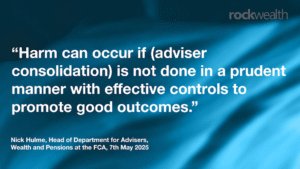
The Financial Conduct Authority has warned that consolidation can lead to "governance failures and misaligned incentives, potentially harming clients if firms prioritise profit over good client outcomes." The regulator has stated it will take "prompt and assertive action" where there's evidence of consumer harm.
The hidden costs for clients of financial advice consolidation
So what does this mean in practice? Several concerning patterns have emerged:Loss of true independence: When an independent financial adviser gets acquired by a larger group, especially one with its own investment products, there's a risk that advice becomes less impartial. The new parent company may have preferred investment platforms or funds, creating pressure on advisers to recommend in-house products over the best options in the whole market.
Fee increases: Many consolidators have introduced higher fees or increased minimum investment requirements after acquisitions. While existing clients are often initially "grandfathered" on old terms, this protection doesn't always last.
Proprietary products: Perhaps most concerning is the trend toward consolidators launching their own range of funds and incentivising advisers to sell these products. This is problematic because research consistently shows that, although there are inevitable exceptions, the vast majority of actively managed funds underperform their benchmarks after fees.
Service changes: Clients may experience a shift from the personal service of a small practice to a more centralised, potentially impersonal model. Some find themselves dealing with call centres or junior staff rather than their trusted adviser, particularly if that person leaves as part of the acquisition.
Warning signs to watch for
If your adviser's firm has been taken over, stay alert for these red flags:Changes in investment recommendations: Be suspicious if your adviser suddenly starts recommending different types of investments, particularly if they're pushing the new firm's own products or moving you from low-cost index funds to more expensive actively managed alternatives.
Fee increases: Watch for notices about changes to fee structures, minimum account sizes, or new charges for services that were previously included.
Different service model: If you're suddenly dealing with new people, call centres, or facing reduced access to your original adviser, this could signal a shift toward a less personalised service model.
Pressure to move platforms: Be wary if there's urgency to transfer your investments to a new platform, especially if the reasoning isn't clearly explained or seems to benefit the firm more than you.
Questions you should ask
Don't be passive if your adviser's firm gets taken over. Here are crucial questions to ask:- "Who now owns my advice firm, and what can you tell me about their business model?"
- "Will the recommendations my financial adviser makes remain truly independent, or are there any restrictions on what they can recommend?"
- "Are there any new fees, charges, or minimum investment requirements?"
- "Will my investments be moved to different platforms or products, and if so, why?"
- "What happens if the new parent company faces financial difficulties?"
When to consider switching financial adviser
Not all consolidation results in poor outcomes, but certain situations warrant serious consideration of moving your business elsewhere:- If your adviser starts pushing expensive, actively managed funds when you previously held low-cost index investments
- If fees increase significantly without corresponding improvements in service
- If you lose access to your trusted adviser or face deteriorating service quality
- If the firm becomes "restricted" rather than independent, limiting the range of products they can recommend
- If you're uncomfortable with the new ownership structure or the firm's financial stability
Your options and next steps
The good news is that you're not trapped. The UK still has thousands of genuinely independent advice firms, like rockwealth.If you decide to stay with a consolidated firm, remain vigilant. Review all communications about changes carefully, ask questions until you're satisfied with the answers, and consider getting a second opinion on your financial plan from an independent adviser to ensure your interests are being properly served.
The bottom line
Consolidation in the financial advice sector isn't inherently bad, but it does change incentives in ways that can harm clients if not carefully managed. The FCA's warning is clear: "while consolidation can provide benefits, harm can occur if not done in a prudent manner with effective controls to promote good outcomes."As a client, you have power. You can ask tough questions of your financial adviser, demand transparency, and ultimately vote with your feet if you're not satisfied. Your financial wellbeing is too important to leave to chance, especially when the firms managing your money may now be operating under very different incentives than when you first chose them.
The consolidation wave may be reshaping the advice landscape, but it doesn't have to reshape your financial future as long as you stay informed and proactive about protecting your interests.
FIND OUT MORE
rockwealth is a client-focussed financial planning firms with an evidence-based investment philosophy.
Want to find out more about how we can help you achieve your goals? Then give us a call or send us a message so we can arrange a meeting.